Read in



Short content wins attention. It just doesn’t solve problems.
The internet is flooded with AI-generated snippets, short-form video and content built to be consumed in seconds. Everything is optimized for speed. The prevailing advice has been clear: go short, go fast and grab attention.
When someone needs a real answer though, speed isn’t enough. As the noise has increased, so has the demand for something better. Users aren’t just looking for quick hits anymore. They’re looking for substance, context and answers that actually resolve their questions.
We’re facing a growing “Depth Deficit”: a shortage of content that fully answers complex queries. For creators, marketers and brands, that gap isn’t a problem, it’s an opportunity. The future of ranking, authority and real audience connection belongs to content that goes deep.
Beyond the 8-second attention span: The surprising data behind long-form success
For years, marketers lived in fear of the "8-second attention span" myth, believing that anything more than a paragraph would be instantly abandoned. This narrative drove an entire generation of content strategy towards brevity. However, recent data from 2026 tells a starkly different story.
The reality of intentional reading: While short-form content excels at initial discovery and fleeting engagement on social feeds, it falls short when users actively seek solutions to real problems. According to recent PressReader trends, we have entered the era of "Intentional Media." Users are bypassing quick headlines to seek out comprehensive guides. Data shows a 35% increase in "intentional reading" sessions over the past 12 months. These are users who bypass the quick headlines and consciously seek out comprehensive guides, detailed analyses and in-depth explainers. They aren't looking to be entertained for a moment; they're looking to be educated for a lifetime (or at least, for the duration of their task).
The metrics that matter in 2026:
- Dwell time is the new PageRank: The days of merely counting clicks are long gone. In 2026, search engine algorithms place immense weight on "active engagement time" and "query satisfaction." A 3,000-word article that keeps a user deeply engaged for six minutes and prevents them from returning to the SERP (Search Engine Results Page) is exponentially more valuable than twenty "top ten" lists that users bounce from in seconds. High dwell time signals to search engines that your content is the definitive answer.
- Conversion rates soar with depth: Analysis from Marketing LTB (2025) and Embryo reveals that long-form guides exceeding 2,000 words see a dramatic lift in commitment. Users are 4x more likely to subscribe to a newsletter, download a lead magnet or purchase a service after consuming a piece of content exceeding 2,000 words. Why? Because depth builds trust and authority in a way that a soundbite simply cannot. It demonstrates expertise, establishes credibility and creates a stronger psychological bond with the reader.
The Information Gain Score: How long-form dominates 2026 search algorithms
The rise of advanced AI in search has fundamentally changed how content is evaluated. In 2026, search engines don't just index keywords—they understand concepts, context and comparative value. This is where the "Information Gain" score becomes critical.
What is the "Information Gain" Score? When a user performs a search, modern algorithms don't just pull the top 10 results based on basic relevance. They effectively "pre-scan" and "synthesize" the existing information landscape. Your content receives a low "Information Gain" score if it merely reiterates what's already widely available and easily summarized by an AI. It's perceived as redundant, lacking unique value and will struggle to rank.
Why long-form is the ultimate "Information Gain" engine:
- Vector expansion: Long-form content allows for deep exploration of a topic from multiple angles, covering numerous sub-topics, related concepts and tangential questions that shorter pieces simply can't accommodate. This creates a rich "vector space" of information that an AI struggles to fully replicate. When you comprehensively cover "X," you naturally address "X's history," "X's impact," "how to do X," "X vs. Y" and "the future of X." This holistic approach signals immense value.
- Nuance and complexity: AI excels at aggregation, but often struggles with true nuance, critical analysis and the synthesis of disparate ideas into a coherent, opinionated whole. Long-form provides the canvas for this intellectual heavy lifting, allowing you to present original arguments, discuss exceptions and explore the "why" behind the "what" in intricate detail. This is where human expertise shines.
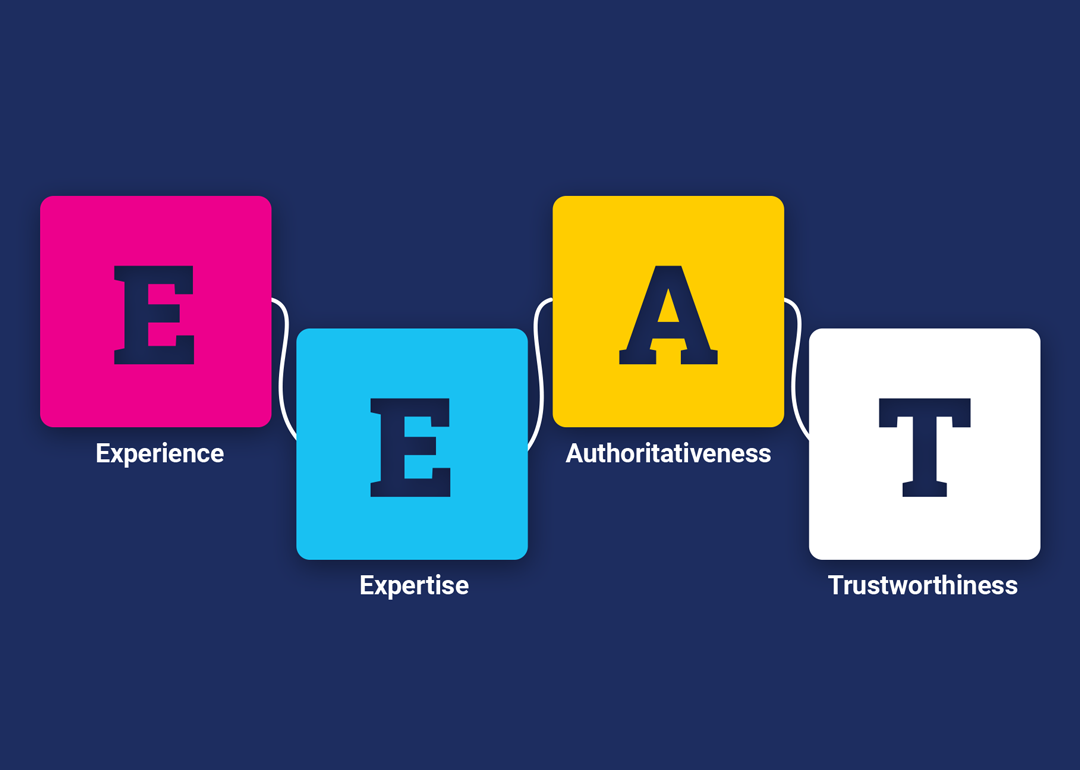
- E-E-A-T manifestation: Long-form content is the ultimate vehicle for demonstrating Experience, Expertise, Authoritativeness and Trustworthiness.
- Experience: Sharing personal case studies, proprietary experiments or unique challenges that had to be overcome.
- Expertise: Providing in-depth technical explanations, frameworks and methodologies.
- Authoritativeness: Citing credible sources, original research and industry thought leaders.
- Trustworthiness: Presenting a balanced view, acknowledging limitations and ensuring factual accuracy.
By its very nature, a comprehensive, well-structured long-form piece cannot have a low Information Gain score if it's done correctly. It provides context, answers follow-up questions proactively and ultimately delivers a superior user experience that search engines are explicitly designed to reward.
Answer engines and the rise of extractable content
As search continues to evolve, we’re no longer optimizing just for rankings. Now we’re optimizing for answers. Rather than simply ranking pages, AI-powered systems like ChatGPT, Google’s AI Overviews and other answer engines extract and synthesize information from them. This introduces a new requirement: your content needs to be extractable.
Answer engines don’t inherently favor long-form content. They favor clarity, structure and completeness. However, long-form content is far more likely to meet those criteria. A comprehensive article provides multiple opportunities for an AI system to identify, interpret and reuse high-quality insights.
Think of it this way: a 500-word post might answer one question. A 3,000-word guide answers the primary question, the follow-ups, the edge cases and the “why” behind it. That creates a much larger surface area for extraction. In a world where AI systems are assembling answers from multiple sources, the most valuable content isn’t the shortest or the fastest, it’s the most useful to pull from.
The psychology behind why long-form content works
Algorithms aren’t alone in craving depth. The human brain is hardwired for it, especially when seeking solutions. This phenomenon is known as "Cognitive Closure."
The "cognitive closure" imperative: When a reader lands on your content seeking information, their brain is in an "open loop." They have a question, a problem or a desire to understand. Short-form content often provides partial answers, leaving these cognitive loops open. This creates frustration and necessitates further searching. Long-form content, however, is designed to bring readers to cognitive closure, providing a comprehensive answer that satisfies their query, resolves their uncertainty and leaves them feeling informed and empowered.
Why length signals trust and satisfaction:
- The "weight of authority" heuristic: Subconsciously, humans often associate length and detail with authority and effort. Before reading a single word, a well-structured, extensive piece of content often triggers a heuristic: "This person put a lot of work into this. It must be good." This initial trust lowers resistance and encourages deeper engagement.
- Problem-solution storytelling: Long-form allows you to take the reader on a journey. You can introduce a problem, explore its various facets, discuss common misconceptions, present your unique solution, provide evidence, address potential objections and outline actionable steps. This narrative arc is deeply satisfying and fosters a sense of being guided by an expert.
- Reduced friction and increased loyalty: When a reader finds everything they need in one place, they don't have to keep clicking around to piece together information. This reduces cognitive load and creates a positive association with your brand. You become their go-to resource, building invaluable loyalty.
The depth deficit: Finding the topics your competitors don’t fully cover
The pivot toward "short and punchy" content by the majority of brands has inadvertently created a vast "blue ocean" for those willing to go deep. While everyone else is fighting for fleeting attention on crowded social feeds, the most valuable real estate—the comprehensive answers to complex queries—is often left wide open.
Identifying your blue ocean:
- Niche complexity: Identify the most complex, multifaceted questions in your industry. These are the topics that cannot be adequately covered in a 500-word blog post or a 60-second video.
- Audience pain points: What are your ideal customers struggling with that requires more than a quick fix? What are the underlying principles they need to understand?
- Competitive analysis: Where are your competitors only scratching the surface? This is your opportunity to own the definitive guide.
It’s impossible for AI to come up with something truly original. So by embracing long-form content, you’re building something that is difficult for competitors to replicate.
The 2026 content audit: Why your strategy needs more than just soundbites
If your organic traffic has plateaued, or your conversions aren't reflecting your efforts, it's time for a radical re-evaluation. Your 2026 content strategy shouldn't be about more content but about deeper, more impactful content .
Actionable steps for your audit:
- Identify "thin" or "zombie" content: Use analytics to pinpoint pages with high impressions but abysmal time-on-page, high bounce rates or low conversion rates. These are topics your audience is searching for, but your existing content is failing to satisfy. Don't delete them. Just identify them as candidates for transformation.
- The consolidation playbook:
- Objective: Transform multiple shallow posts into one authoritative "super-post."
- Process: Take 3–5 existing blog posts that cover related subtopics (e.g., "Email Subject Lines," "Email Open Rates," "Email CTAs").
- Execution: Merge them into a single, comprehensive guide: "The Definitive 2026 Guide to High-Converting Email Marketing." Add original research, updated data, expert quotes, case studies and actionable frameworks that were missing from the individual posts.
- Result: This consolidates your authority, improves internal linking and significantly boosts your Information Gain score for the overarching topic.
- Prioritize originality and "experience":
- The AI test: If an AI can write your outline or first draft without significant human intervention, your content isn't deep enough. It lacks unique "experience."
- Inject proprietary data & insights: Include results from your own experiments, client case studies (anonymized if necessary), unique frameworks you've developed or expert interviews conducted exclusively by your team. This is content that cannot be found anywhere else.
- Multimedia integration: Long-form doesn't mean just text. Embed custom infographics, original video explainers, interactive charts and downloadable templates within your extensive articles. These elements break up the text, enhance engagement and provide multiple learning pathways.
The "source of truth" framework: Maximizing ROI from your deep dives
A common misconception about long-form content is that it's a one-and-done effort. In 2026, long-form content is your anchor asset, the source of truth from which all other marketing material flows. This is the source of truth framework:
1. Create your pillar (the deep dive):
- Invest significant time and resources into crafting one truly exceptional, 2,000-3,500+ word piece of long-form content each month (or quarter). This is your primary SEO play and your authority builder.
2. Breakdown into micro-content:
- Social media: Extract 10–15 key statistics, quotes or mini-lessons for LinkedIn posts, Facebook ads or Instagram carousels.
- Short-form video: Turn a key framework or a "how-to" step into a 60-second vertical video for TikTok or Reels.
- Newsletters: Use a compelling argument or a novel insight from your long-form piece as the core topic for your weekly email newsletter, linking back to the full article.
- Infographics: Design a visual summary of your article's main points or a specific data set.
- Podcasts/webinars: Expand on a controversial point or a complex section from your article into a dedicated podcast episode or a live webinar.
The logic: You're not writing more. You're writing smarter. You're maximizing the ROI of your deep research and expertise by serving it up in various formats for different audiences and platforms. The long-form piece validates and empowers all your shorter content, driving traffic back to your ultimate authority hub.
Investing in the long game and winning
With so much AI-generated noise in 2026, short-form content is your handshake. It gets you noticed. But long-form content is your heartbeat—it builds trust, demonstrates authority and secures lasting relationships.
The "Depth Deficit" is not just a trend. It's a fundamental shift in user behavior and search engine prioritization. The brands and creators who recognize this and commit to providing genuine, comprehensive value will be the ones that dominate their niches.
Stop fighting for eight fleeting seconds of attention. Start building a legacy of expertise. Invest in the long game, because in 2026, the only way to truly rank and connect is to go deep.